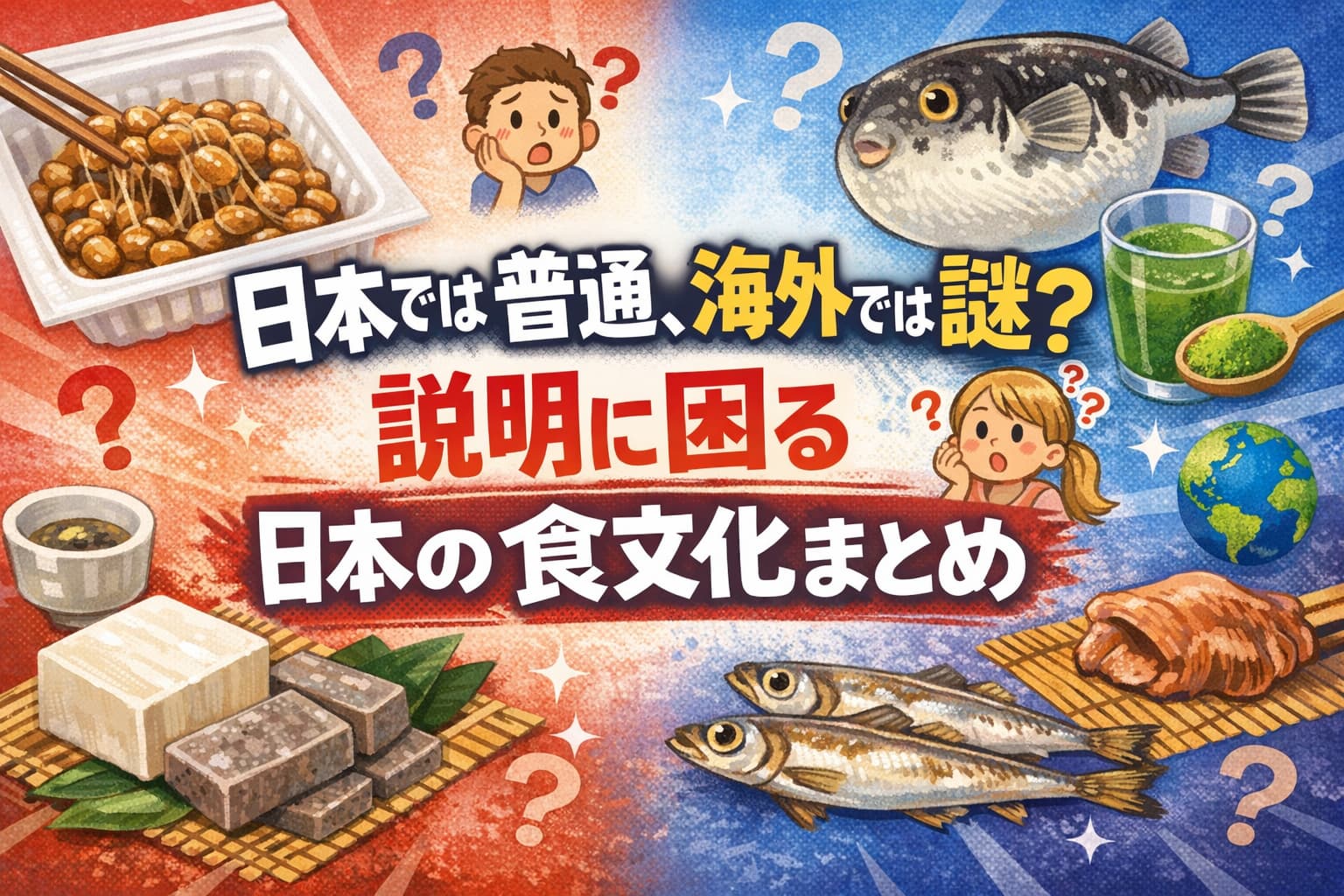
日本では普通なのに、海外の人に説明しようとすると
急に言葉に詰まる食べ物があります。
「なんでそれ食べるの?」
「危なくないの?」
「健康のためって…我慢してるの?」
そんな反応をされて、
「え、普通だけど?」
としか返せなくなるやつです。
今回は、日本人には当たり前すぎて説明が難しい食文化を、
軽めにまとめてみます。
▶関連記事
- 【海外旅行者向け】日本で知っておくと安心なミニマナーガイド(8+1選)
- 【旅行者向け】日本の外食文化ガイド|定食・食べ放題・コンビニ飯まで“失敗しない食事”の選び方
- 海外旅行者にやってほしいこと:日本の“うどん”編
- 【訪日客向け】日本は“出来立ての国”だった!
- 【訪日客向け】|日本の米文化ガイド|おにぎりからライスバーガーまで
日本人には当たり前すぎる食べ物たち
まず代表格が納豆。
発酵、大豆、健康、朝ごはん。
日本人にとっては何の変哲もない存在ですが、海外では
「匂い」「粘り」「見た目」の三重苦でほぼ初見殺し。
しかも「体にいいから食べる」という説明が加わると、
海外の人には
「なぜ美味しくないものをわざわざ?」
と理解されにくいポイントになります。
青汁も同じ系統です。
日本では「野菜不足を補う健康ドリンク」という認識ですが、
海外では
「緑色の粉を水で飲む理由」がまず分からない。
さらに「あーまずい、もう一杯」という有名なフレーズも、
文化を知らないと完全に意味不明です。
苦いのに飲む、という発想自体がかなり日本独自。
次に豆腐・こんにゃく。
ヘルシーで癖がなく、日本では脇役として万能ですが、
海外では
「原料は何?」
「これは料理なの?食材なの?」
と混乱されがちです。
特にこんにゃくは
低カロリー・食物繊維・満腹感
という説明をしないと、
「味のないゼリー」扱いで終わります。
小魚や丸ごと食べる魚も、見た目のハードルが高め。
煮干し、いりこ、ししゃも、わかさぎ。
日本人にとってはカルシウム補給ですが、
海外では
「目が合う食べ物」は心理的に強烈です。
味以前に、まず視覚で止まる。
ここから少し番外編。
フグは完全に別格です。
日本では資格制度と厳格な管理のもとで提供される高級料理ですが、
海外では
「毒のある魚を食べる国」
という一点だけが強調されがち。
味の繊細さより、
「なぜそれを食べようと思ったのか」が先に来ます。
さらにすっぽん。
料理なのか、滋養食なのか、文化なのか。
説明を間違えると一気に誤解される存在です。
日本では
「伝統的に栄養価が高いとされてきた料理」
という扱いですが、
海外では連想があらぬ方向に飛びやすいので、
深掘りしすぎないのが正解です。
こうして見ると、日本の食文化は
「味」よりも
「意味」「習慣」「信頼」
で成立しているものが多いことに気づきます。
健康のため。
昔からそうだから。
制度があるから安心。
日本人にとっては前提でも、
海外の人には一つひとつ説明が必要。
寿司やラーメンより、
こういう日常に溶け込みすぎた食べ物のほうが、
実は一番説明が難しいのかもしれません。
日本では普通。
海外では謎。
そのズレ自体が、
日本の食文化のおもしろさなのだと思います。
海外の方向けに英語紹介もご用意しました👇
Here is the English introduction for international readers:
Japanese Foods That Confuse Foreigners — What’s Normal in Japan, but Hard to Explain
There are foods in Japan that feel completely normal to Japanese people,
but suddenly become very hard to explain to foreigners.
Not because they are rare or exotic,
but because they are too everyday to think about.
This article looks at Japanese foods that often confuse overseas visitors —
not as “weird food,” but as part of daily life and cultural habits.
▶ Related Article
- Mini Etiquette Guide for Visitors in Japan
- 🇬🇧 Dining in Japan: A Complete Guide for Travelers
- 🇯🇵Japan’s “Freshly-Made Culture”: Why Japanese Food Tastes Best at the Moment It’s Made
- The Complete Guide to Buying Onigiri at Japanese Convenience Stores
- Japanese Rice Culture Guide
A classic example is natto.
For Japanese people, natto is just fermented soybeans,
commonly eaten for breakfast and known as a healthy food.
But for many foreigners, the smell, texture, and appearance can be overwhelming.
When they hear that people eat it “for health,”
the question often becomes:
“Why would you eat something you don’t enjoy?”
The idea of eating something because it is good for you,
even if it tastes unusual, is not always easy to understand outside Japan.
Aojiru (green vegetable drink) falls into a similar category.
In Japan, it is simply a way to supplement vegetables in daily life.
However, overseas, drinking green powder mixed with water
can seem confusing at first glance.
The famous Japanese phrase meaning
“It tastes bad, but I’ll drink another one”
also makes little sense without cultural context.
In many countries, health drinks are expected to be both healthy and pleasant.
Then there are foods like tofu and konjac.
They are mild, versatile, and widely used in Japanese cooking,
but often raise questions such as:
“What is this made from?”
“Is this a main dish or just an ingredient?”
Without explanation, konjac in particular
can be misunderstood as a flavorless jelly-like food,
rather than a traditional low-calorie ingredient.
Small whole fish, such as dried sardines or smelt,
can also be difficult for some people to accept visually.
In Japan, they are valued as a source of calcium and nutrients.
Elsewhere, the fact that the fish are eaten whole — eyes and all —
can be a psychological hurdle before taste even becomes a factor.
Some foods belong in a different category entirely.
Fugu (pufferfish), for example, is carefully regulated in Japan
and prepared only by licensed chefs.
To Japanese diners, it represents trust in a strict safety system.
To many foreigners, it is simply “a poisonous fish people eat,”
and the system behind it is often overlooked.
Suppon (softshell turtle) is another example that requires careful explanation.
In Japan, it has historically been regarded as a nourishing dish,
often served as a luxury hot pot.
Without cultural context, however, it can be easily misunderstood,
so it is usually best explained briefly rather than in detail.
Looking at these foods together,
a common pattern begins to appear.
Japanese food culture often values
habit, meaning, and trust —
not just taste.
Something is eaten because it is healthy,
because it has always been eaten,
or because the system behind it is trusted.
These assumptions are natural in Japan,
but not universal.
Interestingly, foods that are deeply embedded in daily life
can be harder to explain than famous dishes like sushi or ramen.
What is ordinary in Japan
can feel mysterious elsewhere.
And that gap itself
is part of what makes Japanese food culture so fascinating.









コメント