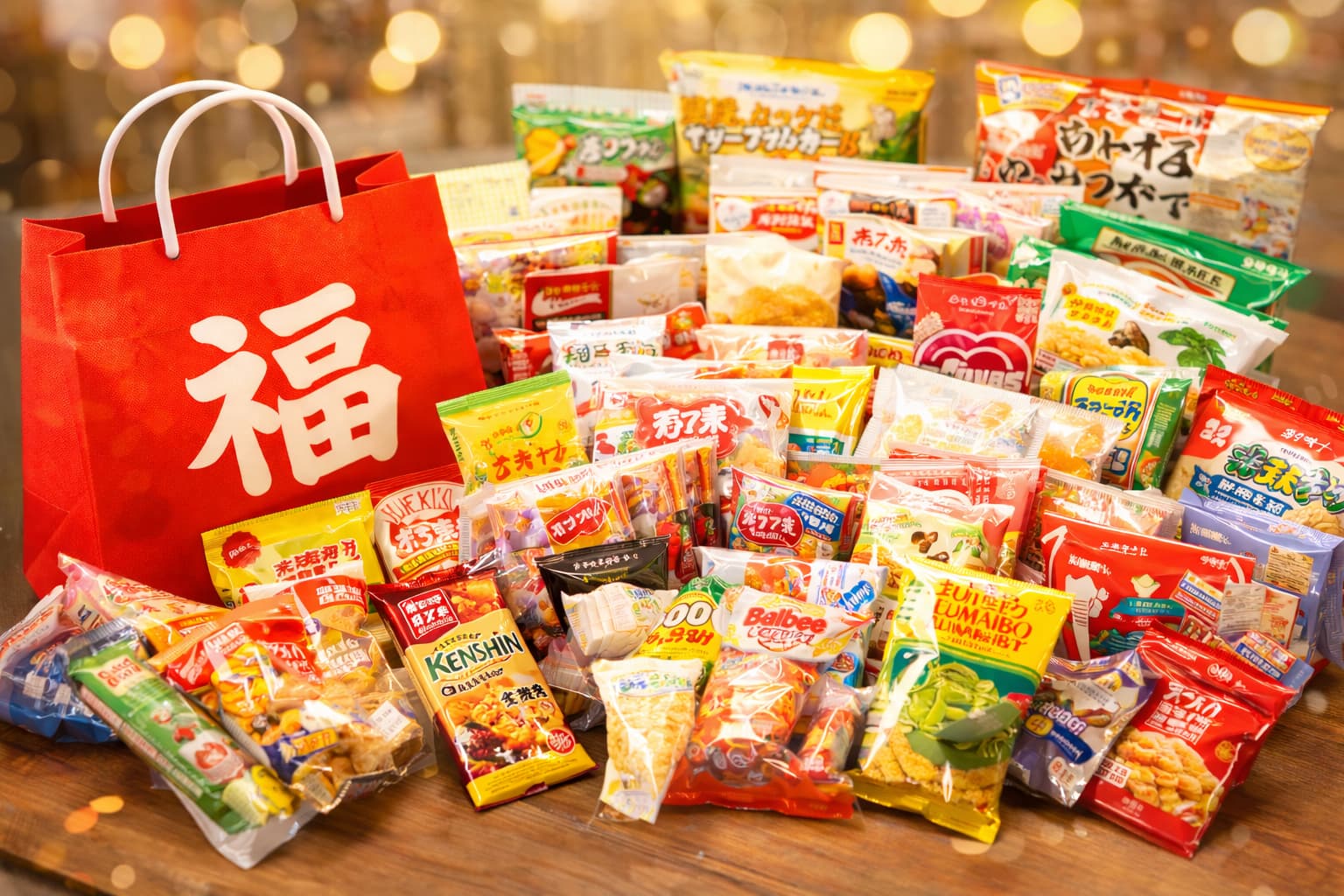
最近の日本では、気がつくと何でも「福袋」になっています。
お菓子や食品はもちろん、文房具やコスメ、さらには趣味のアイテムまで――
福袋は、正月だけの特別な商品というより、すっかり身近な存在になりました。
なぜ私たちは、ここまで福袋に惹かれるのでしょうか。
そして、なぜ日本では「中身が分からない袋」が、これほど自然に受け入れられているのでしょう。
この記事では、身近なお菓子の福袋を入り口に、
福袋という文化が持つ本質や、日本ならではの価値観について掘り下げていきます。
▶関連記事
- 日本では普通、海外では謎?説明に困る日本の食文化まとめ
- 【海外向け】日本の自販機は冬でもHOT?あたたかい飲み物が買える理由を紹介
- 【海外向け】冬の日本で“やってほしいこと”リアルガイド
- 【海外向け】日本の年末年始フルガイド
最近、何でも「福袋」になる理由
最近の日本では、本当に何でも「福袋」になります。
お菓子、食品、文房具、コスメ、雑貨――
福袋は、正月限定の特別商品というより、すでにひとつの売り方の型として定着しました。
少し前までは、福袋といえば百貨店やブランドのものを思い浮かべる人が多かったはずです。
しかし今では、身近なお店や日常的な商品にも、当たり前のように使われています。
では、なぜここまで福袋は広がったのでしょうか。
そもそも福袋とは何だったのか
もともとの福袋は、新年に販売される「中身が分からないお得な袋」でした。
価格以上の商品が入っていることが前提で、
買う側は“運試し”のような感覚を楽しみます。
重要なのは、損をしないという信頼が最初から成立していたことです。
この信頼があるからこそ、中身が見えなくても、福袋は成り立ってきました。
今の福袋は「体験のセット」
現在の福袋は、単なるお得商品ではありません。
- 開ける楽しさ
- 何が入っているかを見るワクワク感
- 誰かに配ったり、分け合ったりする前提
こうした体験そのものが価値になっています。
特にお菓子の福袋では、
小分けされた商品を詰め合わせることで、
「食べる」だけでなく「分ける」「選ぶ」という行動まで含めて商品化されています。
なぜお菓子の福袋が成立するのか
お菓子の福袋が日本で自然に受け入れられる理由はいくつかあります。
まず、小分け文化です。
日本では、お菓子を個包装で分けることが当たり前になっています。
手を汚さず、衛生的で、職場やイベントでも配りやすい。
そしてもう一つが、詰め合わせを前提にした流通の存在です。
メーカーが違う商品をまとめ、用途に合わせて組み合わせる仕組みがあるからこそ、
こうした福袋は日常的に作られています。
福袋は高級品だけのものではない
最近では、ゲームやガンプラなど、趣味の世界にも福袋が広がっています。
こうした「何が入っているかわからない詰め合わせ」こそが、福袋の醍醐味です。
実は私自身、以前に衣服の福袋を購入したことがあります。
その中に入っていたコートが思いのほか気に入り、
今でも冬になると愛用しています。
自分では選ばなかったかもしれない一着が、
「お気に入り」に変わる。
こうした予期せぬ出会いがあるからこそ、
私たちは福袋に惹かれるのかもしれません。
お菓子の福袋が持つ魅力
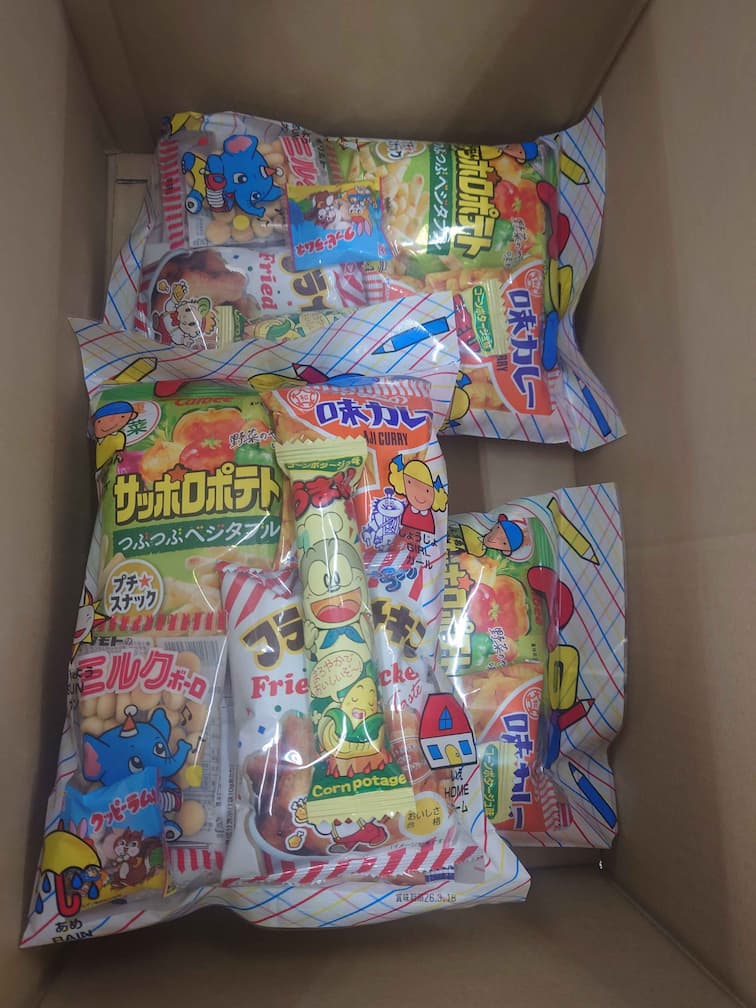
お菓子の福袋は、価格も比較的安く、手に取りやすいのが魅力です。
いろいろな種類を一度に楽しみたい人や、
普段は選ばないお菓子との“新しい出会い”を楽しみたい人に向いています。
まとめ:福袋の本質とは
お菓子の福袋は、単に「安いから」選ばれているわけではありません。
何が入っているかを想像して楽しみ、
未知の味と出会い、
それを誰かと分け合う――。
その体験そのものを味わう商品なのです。
今は何でも福袋になる時代です。
だからこそ福袋は、日本の生活文化や価値観を映し出す存在として、
形を変えながら今も続いているのでしょう。
Why Almost Everything Becomes a “Lucky Bag” in Japan
In recent years, it feels like almost anything in Japan can become a Fukubukuro — a lucky bag.
Snacks, food, stationery, cosmetics, and daily goods.
Rather than being a special product limited to the New Year, lucky bags have become a standard way of selling items.
In the past, many people associated Fukubukuro with department stores or famous brands.
Today, however, they are commonly found in everyday shops and for ordinary products.
So why have lucky bags become so widespread?
▶ Related Article
- The Complete Guide to Buying Onigiri at Japanese Convenience Stores
- Why Japanese Vending Machines Sell HOT Drinks in Winter
- A Real Winter Guide to Japan for International Travelers
- Complete English Guide: How Japan Spends New Year’s — From Year-End Cleaning, Anime Bargains, Toshikoshi Soba, Hatsumode, First Sunrise to New Year Sales
What Is a Fukubukuro Originally?
Traditionally, a Fukubukuro was a bag sold at the start of the New Year, filled with items whose contents were unknown.
The total value was expected to exceed the price, and buyers enjoyed it as a kind of “lucky draw.”
The most important element was trust.
Customers believed they would not lose money, even if they could not see what was inside.
Because of this trust, Fukubukuro became an accepted tradition.
Modern Fukubukuro Are About the Experience
Today’s Fukubukuro are not just about saving money.
- The fun of opening the bag
- The excitement of discovering what is inside
- The idea of sharing items with others
These experiences themselves have become part of the value.
Snack lucky bags, in particular, are designed around this idea.
By combining many individually wrapped snacks, they turn not only “eating,” but also “choosing” and “sharing,” into part of the product experience.
Why Snack Lucky Bags Work So Well in Japan
There are several reasons snack lucky bags are naturally accepted in Japan.
First is the culture of individual packaging.
Snacks are commonly wrapped one by one, making them clean, hygienic, and easy to share at work or events.
Another key factor is the distribution system that allows different products to be combined.
Because items from different manufacturers can be gathered and organized for specific purposes,
snack lucky bags can be created and sold as everyday products.
Fukubukuro Are Not Only for Luxury Goods
Today, Fukubukuro can be found even in hobby-related fields such as games and plastic model kits.
These “mystery assortments,” where the contents are unknown, are exactly what makes lucky bags appealing.
I once bought a clothing Fukubukuro myself.
One of the items inside was a coat that turned out to be much better than I expected,
and I still wear it every winter.
An item you might never have chosen on your own can become a favorite.
That kind of unexpected encounter is one of the main reasons people are drawn to Fukubukuro.
The Unique Appeal of Snack Lucky Bags
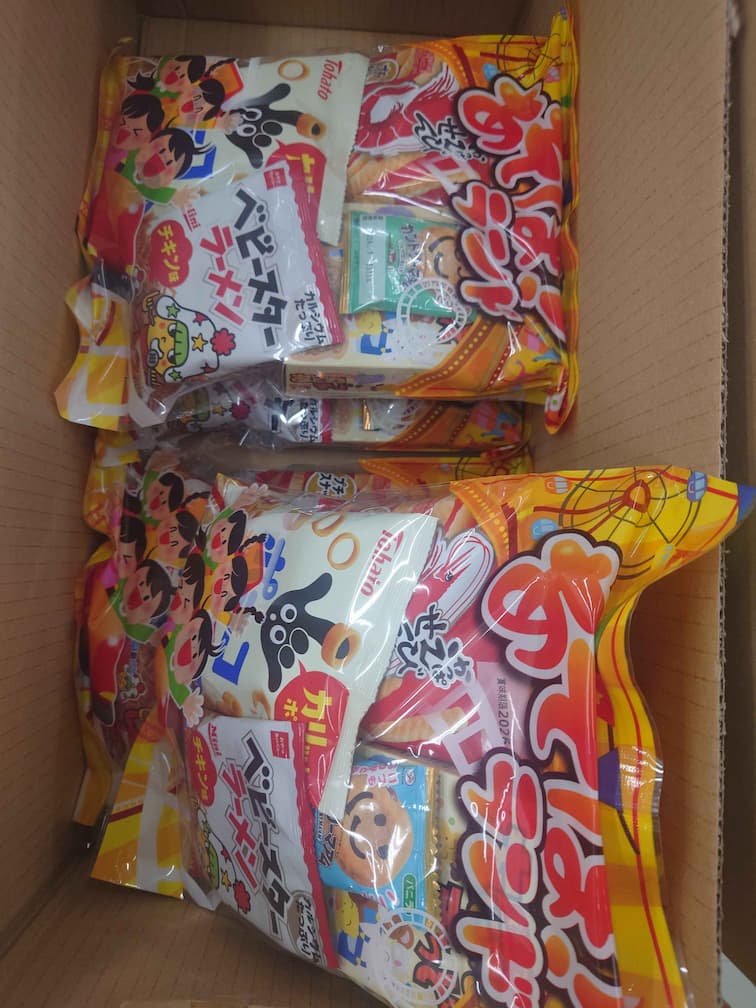
Snack lucky bags are especially approachable because they are affordable and easy to try.
They are perfect for people who want to enjoy many kinds of snacks at once,
or for those looking to discover flavors they would not normally choose.
Conclusion: The Essence of Fukubukuro
Snack lucky bags are not chosen simply because they are cheap.
They invite people to imagine what might be inside,
to encounter new flavors,
and to share those discoveries with others.
That experience itself is the real product.
In an era when almost anything can become a Fukubukuro,
lucky bags continue to evolve while reflecting Japanese values and everyday culture.
Their form may change, but their core idea remains the same.






コメント
コメント一覧 (1件)
[…] Why Almost Everything Becomes a “Lucky Bag” in Japan […]