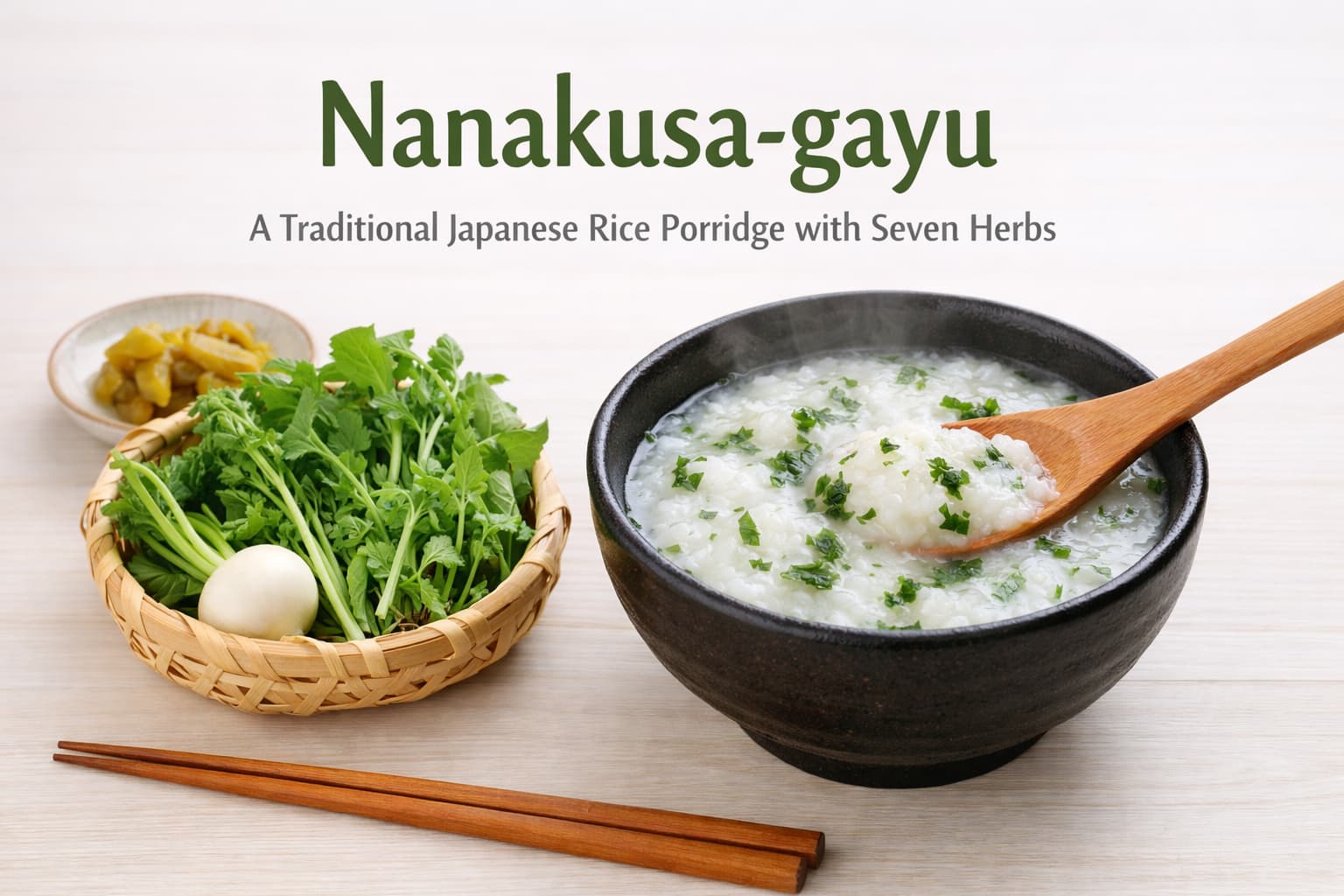
七草がゆ(ななくさがゆ)は、
毎年1月7日に食べられる、日本の伝統的な風習のひとつです。
白いおかゆに、春の七草と呼ばれる葉物を刻んで加えた、
とてもシンプルな料理で、
お正月の行事を締めくくる存在として知られています。
▶関連記事
- 日本の駄菓子屋ガイド|海外で話題の伝統お菓子と人気スナック
- なぜ日本では「お菓子の福袋」が人気?安さ以上に楽しまれている理由
- 【海外向け】日本の自販機は冬でもHOT?あたたかい飲み物が買える理由を紹介
- 【海外向け】冬の日本で“やってほしいこと”リアルガイド
- 【海外向け】日本の年末年始フルガイド
なぜ1月7日に食べるの?
日本のお正月は、
おせち料理やお餅など、
普段よりも少し重たい食事が続く時期です。
七草がゆは、
そうしたお正月のあとに
食事をいったん落ち着かせる節目として食べられてきました。
特別なごちそうではなく、
あえて控えめで静かな一品を選ぶ――
そこに、日本らしい季節感や暮らしのリズムが表れています。
七草がゆは今でも食べられている?
現在でも、七草がゆは
主に家庭で食べられる風習として続いています。
1月上旬になると、
日本のスーパーでは
七草がゆ用の七草セットが
期間限定で並ぶことがあります。
これを使えば、
特別な準備をしなくても、
家庭で七草がゆを作ることができます。
外で食べることはできる?
七草がゆは基本的に家庭料理ですが、
おかゆ専門店などで、季節のおかゆとして提供されることもあります。
ただし、そうした機会は多くはなく、
外食で出会えるのはかなり珍しい存在です。
「続いているけれど、無理に続けない」文化
七草がゆは、
必ず食べなければならない行事ではありません。
家庭によっては、
七草を省略したおかゆを食べたり、
特に何もしない年があったりと、
とてもゆるやかに続いている風習でもあります。
それでも毎年この時期になると、
「七草がゆ」という言葉を思い出す――
そんな距離感で、今も日本の暮らしの中に残っています。
まとめ
七草がゆは、
健康法や特別な料理というよりも、
日本の年中行事のひとつとして受け継がれてきました。
派手ではありませんが、
季節の区切りを大切にする日本の文化を
静かに感じられる風習です。
What Is Nanakusa-gayu?
A Traditional Japanese Custom Eaten on January 7
Nanakusa-gayu is a traditional custom in Japan.
It is a simple rice porridge eaten on January 7th.
The dish is made by adding seven finely chopped spring herbs to plain rice porridge
It is not a special feast, but a quiet meal that marks the end of the New Year period.
▶ Related Article
- Discover Japan’s Dagashi Shops – A Sweet World You’ve Never Seen Before
- Why Almost Everything Becomes a “Lucky Bag” in Japan
- Why Japanese Vending Machines Sell HOT Drinks in Winter
- A Real Winter Guide to Japan for International Travelers
- Complete English Guide: How Japan Spends New Year’s — From Year-End Cleaning, Anime Bargains, Toshikoshi Soba, Hatsumode, First Sunrise to New Year Sales
Why Do People Eat It on January 7th?
In Japan, New Year celebrations often include rich foods such as special holiday dishes and rice cakes.
Nanakusa-gayu is eaten after these celebrations
to give the stomach a rest
and to return to everyday life and a slower rhythm after the holidays.
Is Nanakusa-gayu Still Eaten Today?
Yes. Nanakusa-gayu is still eaten today,
mostly at home.
In early January,
some supermarkets sell small sets of the seven herbs for a limited time.
These sets make it easy for families to prepare nanakusa-gayu without special effort.
The seven herbs traditionally used are:
water dropwort, shepherd’s purse, cudweed, chickweed,
nipplewort, turnip, and radish.
You don’t need to remember them — today, most people simply buy a prepared herb set.
Can You Eat It at Restaurants?
Nanakusa-gayu is mainly a home-style dish,
but you may occasionally find seasonal porridge at specialty rice porridge restaurants.
This is relatively rare,
and most people experience nanakusa-gayu at home rather than when eating out.
A Custom That Continues Gently
Nanakusa-gayu is not something everyone must eat every year.
Some families make it with all seven herbs,
others eat plain rice porridge,
and some skip it entirely.
Even so, the idea of nanakusa-gayu quietly returns each January.
It remains part of Japanese seasonal life,
not as a rule, but as a gentle tradition.
In Summary
Nanakusa-gayu is not about medicine or special effects.
It is best understood as a seasonal custom.
Through this simple bowl of porridge,
Japanese culture expresses the idea of slowing down,
marking a transition,
and respecting the rhythm of the year.








コメント