関連記事
- 日本でやってみてほしい食べ物体験10選+1|海外旅行者向けリアルガイド
- 【海外向け】冬の日本で“やってほしいこと”リアルガイド
- 【旅行者向け】ホテル周辺でできる“日本ならではの小さな体験”ガイド
- 【旅行者向け】日本の外食文化ガイド|定食・食べ放題・コンビニ飯まで“失敗しない食事”の選び方
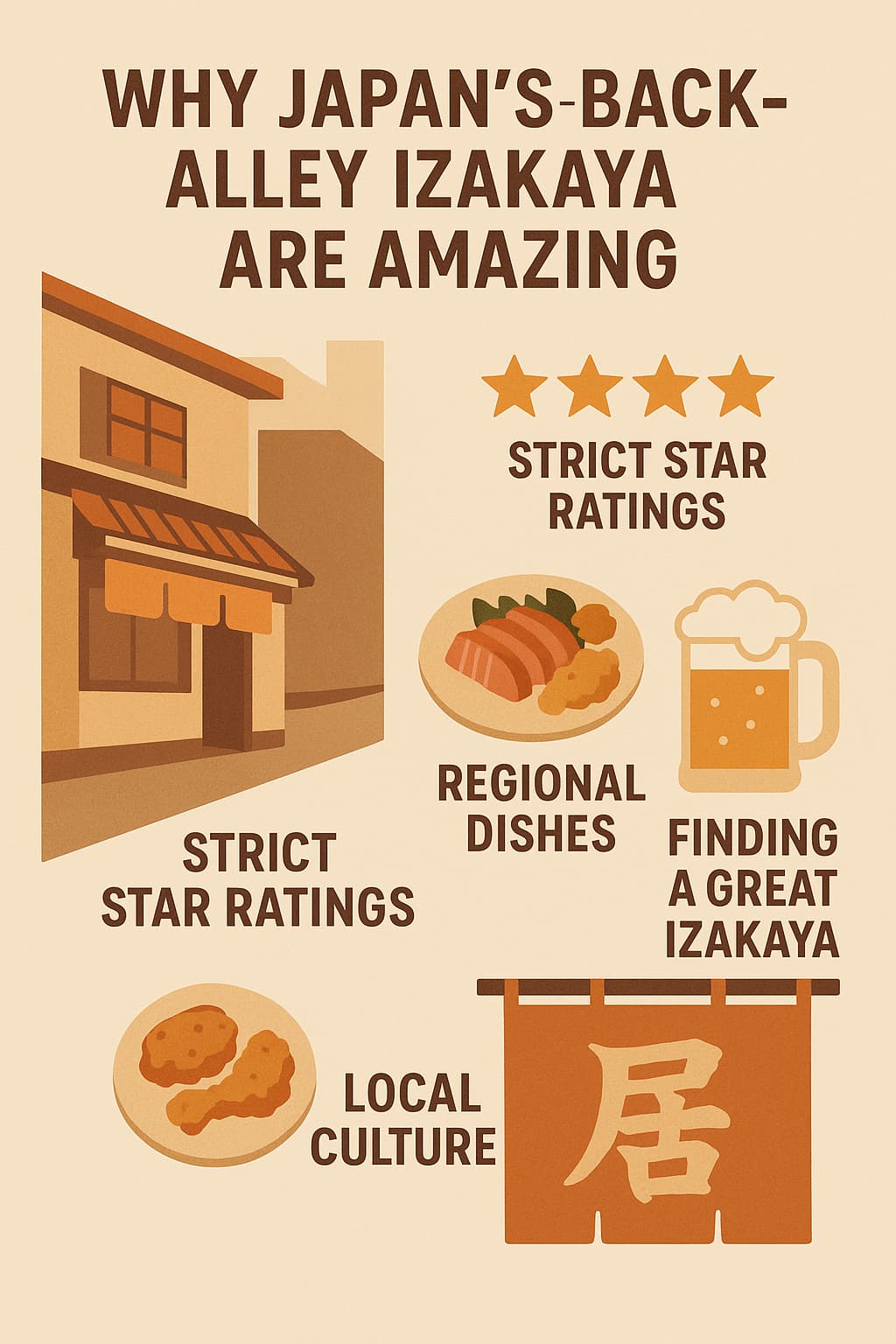
- なぜ日本の“路地裏”には名店が多いのか?
🟧 1|はじめに:なぜ日本の居酒屋は“世界で最もユニークな飲食文化”なのか?
日本を訪れる外国人観光客の多くが、
帰国後にこう話すと言われます。
「一番思い出に残ったのは、寿司でもラーメンでもなく“居酒屋”だった」
理由はシンプルです。
居酒屋は、
家庭料理 × 地方文化 × 酒場 × コミュニティ × 職人の小料理
が全部混ざった、日本独自の飲食ジャンル。
- 高級でもない
- ファストフードでもない
- ただのバーでもない
- レストランでもない
“日本の生活文化”が最も表れるのは、実は居酒屋。
しかし、その魅力が深い一方で、
仕組みを知らないと“入りづらさ”もある。
「お通しって何?」「英語メニューないけど…」
「どう選べばハズれない?」「路地裏は安全?」
など、“初見殺し”の要素も多いジャンルです。
この記事では、
あなたが作った路地裏記事とも自然につながる形で、
・なぜ居酒屋は日本文化の象徴なのか
・どう選べば美味しい店に出会えるか
・個人店の強みと路地裏文化の関係
・日本の星評価(Google Maps)の読み方
・海外の人がつまずきやすいポイント
すべてを体系的に解説します。
🟧 2|居酒屋とは何か|レストランでもバーでもない“第3の文化空間”
海外で「bar」や「pub」は飲む場所、
「restaurant」は食事の場所という区分があります。
しかし日本の居酒屋は、
そのどちらにも当てはまらない。
🔥 居酒屋は日本で最も“ハイブリッドな飲食空間”
- 食事:家庭料理・郷土料理・職人の一品
- 酒場:自家製サワー・地酒・焼酎
- コミュニティ:常連と店主が会話する文化
- 安心感:1人でも入りやすい
- ジャンルの自由度:刺身・揚げ物・煮物・サラダ・麺…なんでも出る
海外から来た人がまず驚くのは、
「食べ物が美味しすぎる酒場が多すぎる」 という点。
日本の居酒屋は、
「酒が主役」ではなく
“料理が主役の酒場” が多い。
これは、日本の家庭料理の文化が
そのまま外食に持ち込まれた結果です。
🟧 3|都市部の居酒屋は“地方文化の交差点”でもある
非常に重要なポイントですが——
都市の居酒屋の多くは地方出身者が営んでいる。
そのため、
大阪で北海道の料理が食べられたり、
東京で九州の地鶏が食べられたりする。
つまり、
・地方料理
・家庭料理
・地酒
・土着の味付け
が、都市の小さな居酒屋で自然と再生産されている。
これが、海外にはない独自性です。
✔ “都市の中で地方旅行できる”のが日本の居酒屋
刺身・煮物・焼き鳥・揚げ物など、
観光地の飲食店では味わえない種類の料理が揃うのも、
居酒屋の大きな強み。
🟧 4|お通し・料金・システム|誤解を解消する“最初の壁”
外国人観光客が一番つまずきやすいのがここ。
✔ お通し(Table Charge)は“文化”であって“ぼったくり”ではない
- 日本の多くの居酒屋は 席料+小皿料理のセット を供する
- 料金は300〜600円ほど
- ウェルカムディッシュの文化的役割もある
- アジア圏・欧米との“価値観の違い”を理解するのに重要
誤解されやすいので、丁寧に説明することが非常に大切。
✔ おしぼりの提供は無料(サービス文化の象徴)
湿ったタオル(おしぼり)が無料で出されるのも、
海外では珍しい日本のおもてなし文化。
✔ チップ不要
アメリカ・カナダ・一部の欧州圏から来た読者には特に刺さる情報。
✔ 支払い方法は店によりバラバラ
- 個人店:現金がまだ多い
- チェーン:カードOK
- 路地裏の店:現金オンリーの場合も
※この情報は海外読者の不安を大きく減らす。
🟧 5|“個人店の強さ”と“チェーンの役割”
日本の居酒屋文化の本質は、
個人店が強い土壌にあること。
しかし同時に、
チェーン店にも“初心者に優しい役割” がある。
🔥 個人店の強み
- 味に個性がある
- 地方料理が出てくる
- 常連との距離が近い
- 路地裏でも生き残る実力者
🔥 チェーン店の役割
- 鳥貴族:均一価格・写真メニューで初心者向け
- 塚田農場:地方料理を気軽に試せる
このバランス感が、
「日本の外食文化が世界一分かりにくい理由」でもあります。
🟧 6|お店を“見抜く”方法|外観・メニュー・客層で判断できる
ここからは、実際に読者が「良い居酒屋」を見つけるための実用編。
✔ ① のれん(暖簾)が年季入っている
古くて少し色褪せたのれんは、
店舗が何年も続いている証拠。
日本では「悪い店はすぐ消える」ため、
長寿命の店=味が安定していることが多い。
✔ ② メニュー数が少ない店は“当たり”
居酒屋でもメニューが100品ある店は、
実は観光向け・チェーン向けの傾向が強い。
本当に強い個人店は、定番に集中する。
- 焼き鳥専門
- 刺身+煮物
- 手仕込み揚げ物
- 地方料理少数精鋭
このタイプの店は、外れにくい。
✔ ③ 日本人客が多い
これは海外読者にとって分かりやすい最強の指標。
- 日本語の会話が多い
- 常連らしき人が多い
- 地元民の集まりっぽい
これらは総じて味で選ばれている店。
✔ ④ 外観は地味でも清潔感がある
日本は“見た目で高級に見せない”文化があるため、
外観の豪華さよりも、中の雰囲気・清潔感が重要。
✔ ⑤ Googleレビューが短文ばかり → 微妙
逆に「美味しかったです!」「良かった!」だけの店は不安定。
長文レビュー(日本語)が多い店ほど、
体験談に基づく評価が多く、安定している。
🟧 7|頼むべき料理|文化 × 実用で紹介する(5〜7品に絞る)
海外読者向けに“絶対に外れにくい鉄板メニュー”だけ紹介。
🍢 ① 焼き鳥(Yakitori)
居酒屋文化の象徴。
- ねぎま(鶏もも+ねぎ)
- つくね
- 皮
- ぼんじり
など。
焼き鳥は「店の実力」が分かりやすい。
🍤 ② 唐揚げ(Karaage)
居酒屋の王者。
調理スピード・揚げ方・味付けで店の品質がわかる。
🐟 ③ 刺身(Sashimi)
都市部でも驚くほどレベルが高い。
地方出身店主が扱う魚は特に質が良い。
🧊 ④ 揚げ出し豆腐(Agedashi Tofu)
海外にはあまり見られない独自料理。
温かく優しい味で、ノンアル勢にも人気。
🌾 ⑤ おにぎり・だし巻き卵(Rice Ball / Dashimaki Tamago)
「飲んだ後の締め文化」を紹介するのにぴったり。
家庭料理の良さが伝わる。
🫛 ⑥ 枝豆(Edamame)
日本といえばこれ。
酒を飲まない人が頼んでも全く違和感がない、最強の万能メニュー。
🟧 8|路地裏文化と居酒屋文化の共通点|“生き残り組だけが残る”世界
前半で書いた路地裏記事と自然につながるポイント。
✔ 路地裏=個人店の聖域
✔ 個人店は大通りの家賃で戦えない
✔ だから裏路地へ流れる
✔ しかし治安が良い日本では路地裏でも人が来る
✔ 味と人柄で勝負した店だけが生き残る
この構造が 居酒屋文化にも完全に一致する。
つまり、
「路地裏 × 居酒屋」は最強の組み合わせ
特に都市部の
- 地方出身者の店主
- 地酒を扱う酒場
- 料理のこだわりが強い
こうした店は観光客が知らない名店になりやすい。
🟧 9|日本の星評価が“世界で最も厳しい”理由(補正の読み方)
非常に重要。
⭐ 日本の評価は1段階低く出る文化
- “普通に美味しい”でも★3.1
- ★3.5〜3.7は“安定した良店”
- ★4.0以上は“行列レベル”
- ★4.4以上は“伝説級”でほとんど存在しない
⭐ 海外との対応関係
- ★3.4 → 海外 4.0級
- ★3.7 → 海外 4.3〜4.6級
- ★4.0 → 海外 4.7〜5.0級
海外読者にとっては「数字の感覚」が全然違う。
🟧 10|実用:失敗しない居酒屋の探し方
海外&日本人両方に刺さる最強ガイド。
✔ ① 路地裏 × 星3.4〜3.8 のゾーンを狙う
最強。
✔ ② 説明文の長いレビューが多い
当たりやすい。
✔ ③ メニューに写真が少なくても気にしなくていい
個人店は写真より“味”に力を入れる。
✔ ④ 英語メニューがなくても大丈夫
- 焼き鳥
- 唐揚げ
- 刺身
- 枝豆
は世界共通語みたいなもの。
✔ ⑤ 1人飲みの客が多ければ安心
日本は“おひとりさま文化”がある。
🟧 11|注意点とマナー(最小限でOK)
海外読者にありがたいポイントだけ。
✔ お通し(Table Charge)は文化
✔ 禁煙店が多いが、古い店は喫煙可のことも
✔ チップ不要
✔ 個人店は閉店が早いことがある(22:00〜23:00)
✔ シェア文化OK(取り皿もらえる)
✔ 決済方法が店により異なる
読みやすさのため、箇条書きがベスト。
🟧 12|お試しで行くなら:初心者向けチェーン
あなたの意図通り、短く濃く。
🟠 鳥貴族(Torikizoku)
均一価格・写真付きメニューで分かりやすい。
焼き鳥の品質が安定しており、居酒屋の王道を体験できる。
🟡 塚田農場(Tsukada Nojo)
地方料理(宮崎・鹿児島系)を気軽に楽しみたい初心者に最適。
地鶏や郷土料理を試せる“入門編”。
🟧 13|ノンアルでも“全く浮かない”理由
これ、海外読者にも日本人にもウケる大事な情報。
日本は
- ウーロン茶
- 緑茶
- ノンアルビール
- ジュース
などの注文が普通で、店も慣れている。
食事メインの人が多い文化だから。
居酒屋は“酒場”でありながら、
実は“食堂でもある” という日本独自のスタイルのおかげ。
🟧 14|まとめ|居酒屋は“日本の生活文化の縮図”である
✔ 都市部の居酒屋は地方文化の交差点
✔ 個人店は味と人柄で勝負する職人の世界
✔ 路地裏文化と強く結びつく
✔ 日本の星評価は世界一厳しいため、数字を補正して読む必要がある
✔ 当たりやすいのは“路地裏 × 3.4〜3.8”
✔ 料理は少量多種で楽しむスタイル
✔ 英語がなくても、焼き鳥・唐揚げ・刺身は世界共通
✔ 初心者はトリキか塚田でOK
✔ ノンアルでも居心地はいい
居酒屋はただの飲食店ではない。
旅の中で最も「日本の生活文化」に触れられる場所であり、
都市の中で地方文化が集まり、
個人店の職人技が息づく“日常の劇場”です。
そして日本の治安の良さと、
店主の誠実さが守ってきた文化でもあります。
日本を旅するなら、
ぜひ一度、路地裏の小さな居酒屋の扉を開けてみてください。
そこには観光ガイドに載らない、
“小さな旅の宝物”があります。
🟦 Bonus|English Introduction(English Guide)
A perfect guide for international travelers who want to explore Japan beyond sushi and ramen.
🇬🇧 English Introduction
Izakaya — Japanese-style pubs — are one of the most memorable food experiences for many travelers.
But unlike restaurants or bars overseas, Japanese izakaya are a unique mix of:
- local home-style dishes
- regional specialties
- casual drinking culture
- friendly community atmosphere
- safe and cozy back-street locations
At the same time, izakaya can be confusing for first-timers:
What is “otoshi”? Why are the star ratings so low? Is it safe to go into small back alleys? How do I order without English menus?
This guide explains everything you need:
✔ Why back-alley izakaya are often the best
✔ Why Japan’s Google star ratings look lower than they really are
✔ How to interpret ratings (3.4–3.8★ = hidden gems)
✔ What dishes to order
✔ How to spot a good izakaya
✔ Important tips (no tipping, table charge, early closing times)
✔ Beginner-friendly chains like Torikizoku
✔ Why non-drinkers can enjoy izakaya too
Once you understand the rules behind
Back-Alley Culture × Japan’s Strict Star Rating System,
you’ll consistently find amazing food — and avoid tourist traps.
🇬🇧 Complete English Guide: Why Japan’s Izakaya Culture Is Unique — And How to Find Amazing Back-Alley Restaurants
The ultimate guide for international travelers who want to explore Japan beyond sushi and ramen.
🟧 1|Introduction — Why Izakaya Are One of Japan’s Most Beloved Food Experiences
Many travelers say:
“The most memorable meal in Japan wasn’t sushi — it was the izakaya.”
Izakaya (Japanese-style pubs) are not bars, not restaurants, not cafés.
They are a hybrid cultural space where:
- Home-style cooking
- Regional dishes
- Drinking culture
- Casual socializing
- Local craftsmanship
all blend into one.
But for first-timers, izakaya can feel confusing:
- What is otoshi (table charge)?
- Why are star ratings so low?
- Are back alleys safe?
- How do I order without English menus?
This guide explains everything — not just where to go, but why Japan’s izakaya culture works the way it does.
🟧 2|What Is an Izakaya?
A Cultural Space That’s Neither a Bar nor a Restaurant**
In many countries:
- Bars → drinking
- Restaurants → eating
Japan’s izakaya break this rule.
🔥 Izakaya = A place where food is just as important as the drinks
Typical features include:
- Wide range of dishes (grilled, fried, raw, simmered)
- Small portions meant for sharing
- A relaxed atmosphere
- Affordable prices
- A mix of locals, solo diners, and after-work groups
To foreigners, izakaya often feel like:
“A restaurant with better food than expected, and a bar with better food than expected.”
That hybrid nature is exactly what makes them special.
🟧 3|Why Big-City Izakaya Are Actually Hubs of Regional Culture
One of the most unique aspects of Japan:
Many urban izakaya are run by people from rural regions.
This means a single Tokyo back-alley pub might serve:
- Miyazaki chicken
- Hokkaido seafood
- Hiroshima oysters
- Kyushu-style broth dishes
- Regional sake
In other words:
You can “travel through Japan” without leaving Tokyo or Osaka.
This regional diversity is something travelers barely notice at first — and one of Japan’s hidden cultural treasures.
🟧 4|Understanding Otoshi, Table Charges, and Other “First-Time Confusions”
Izakaya are easygoing, but the system can be unfamiliar.
✔ Otoshi = Table Charge + Small Dish
Most izakaya charge 300–600 yen per person when you sit down.
This includes:
- A small appetizer
- A seat charge (similar to a cover charge)
It is not a scam.
It is a part of Japanese dining culture and helps small shops operate.
✔ Oshibori (Wet Towel)
Free.
A symbol of Japan’s service culture.
✔ No Tipping
Japan has no tipping culture.
The price you see is the price you pay.
✔ Payment Methods
- Small shops may be cash-only
- Chains accept cards/QR payments
- Back-alley shops vary
Knowing this removes most first-time anxiety.
🟧 5|Independent Shops vs. Chains — Both Have Roles
🔥 Independent izakaya (most back-alley places)
- Flavor is unique to the chef
- Menu reflects local hometown cuisine
- Atmosphere is warm and personal
- Survive only through quality → rarely bad
🔥 Beginner-friendly chains (short version)
Torikizoku (¥ uniform pricing)
Easy ordering with photos. Great for trying Japanese staples.
Tsukada Nojo
Regional chicken and local dishes from Kyushu.
A safe entry point into “local cuisine”.
Use chains as a warm-up — then dive into small independent shops.
🟧 6|How to Identify a Good Izakaya (Even Without English)
✔ ① An old, well-used noren (fabric curtain)
A sign the restaurant has survived for years — meaning locals trust it.
✔ ② A small, focused menu
The fewer the dishes, the better the chef typically is.
✔ ③ Many Japanese customers
Locals know where the good food is.
✔ ④ Plain exterior but clean interior
Japan doesn’t rely on flashy exteriors.
Cleanliness inside is what matters.
✔ ⑤ Long and detailed Japanese reviews (not short ones)
Short reviews = unreliable
Long reviews = real experiences
🟧 7|What to Order: The “Safe and Delicious” Essentials
Don’t worry about fancy dishes. Start with Japan’s izakaya basics.
🍢 Yakitori (Grilled Chicken Skewers)
The easiest way to judge a shop’s skill.
Recommend: negima, tsukune, bonjiri, kawa.
🍤 Karaage (Japanese Fried Chicken)
Universally loved.
A must-order.
🐟 Sashimi (Assorted Raw Fish)
Urban izakaya often have surprisingly high quality.
Especially good at shops run by coastal-region owners.
🧊 Agedashi Tofu (Deep-Fried Tofu in Broth)
Comforting, warm, and uniquely Japanese.
🌾 Onigiri or Dashimaki Tamago
Classic “finishing dishes” after drinking.
🫛 Edamame
Simple but iconic.
Perfect for non-drinkers.
🟧 8|The Hidden Connection:
Back-Alley Culture × Izakaya Culture**
Japan’s back alleys are nothing like those in other countries.
They are:
- Safe
- Clean
- Filled with foot traffic
- Packed with small independent shops
Because small restaurants can’t afford main-street rent,
they move to back alleys — where survival depends entirely on:
- Flavor
- Hospitality
- Local loyalty
Only strong shops survive.
This is why the best izakaya often sit in quiet, narrow streets.
🟧 9|Why Japan’s Google Star Ratings Look Low
(And How to Read Them Correctly)**
This surprises almost every traveler.
⭐ Japan has the strictest star-rating culture in the world.
Here is the REAL meaning:
★3.0 – ★3.4
Good. Worth eating.
Equivalent to 4.0 overseas.
★3.5 – ★3.8
Local favorite. Consistently good.
Equivalent to 4.3–4.6 overseas.
★3.9 – ★4.2
Very popular. High-level.
Equivalent to 4.7–5.0.
★4.3+
Almost legendary. Extremely rare.
⭐ Back-alley izakaya are especially “underrated” because:
- Few foreigners
- Few English reviews
- Mostly local customers
- Poor online promotion
→ Star rating appears lower than actual quality
A good rule:
Displayed rating +0.5 = Real quality
Rating 3.4–3.8 = Hidden gem zone
🟧 10|How to Successfully Find a Good Izakaya
✔ Go to back alleys with 3.4–3.8★
The best balance of value, flavor, and locals.
✔ Look at review length
Long = real
Short = unreliable
✔ Don’t worry about English menus
Most must-order dishes are universal.
✔ If solo diners are present, it’s safe and friendly
Japan has a strong “solo dining culture”.
🟧 11|Important Tips & Manners (Simple and Practical)
- Otoshi (table charge) is normal
- No tipping
- Small shops may close early (22:00–23:00)
- Smoking may be allowed in older shops
- Sharing plates is normal (ask for small plates)
- Payment method varies
Short, clear rules help travelers feel confident.
🟧 12|Beginner-Friendly Chain Izakaya (Short & Useful)
🟠 Torikizoku
Photo menu, affordable, classic izakaya experience.
🟡 Tsukada Nojo
Regional Kyushu-style dishes, friendly to first-timers.
Use them as a safe “practice round”.
🟧 13|Why Non-Drinkers Can Enjoy Izakaya Too
Izakaya are not only for drinkers.
Japan has many non-alcoholic options:
- Oolong tea
- Green tea
- Non-alcoholic beer
- Soft drinks
Because food is central to izakaya culture,
ordering no alcohol is completely normal.
🟧 14|Conclusion — Izakaya Are the Heart of Japanese Daily Culture
Izakaya are:
- A meeting point of regional cultures
- A place where independent chefs shine
- A safe and lively back-alley tradition
- A showcase of Japan’s strict rating culture
- A perfect way to eat like a local
- A warm, welcoming space even for non-drinkers
If you want to experience “real Japan,”
skip the tourist traps and open the sliding door of a small back-alley izakaya.
Your best meal in Japan might be waiting there.








コメント