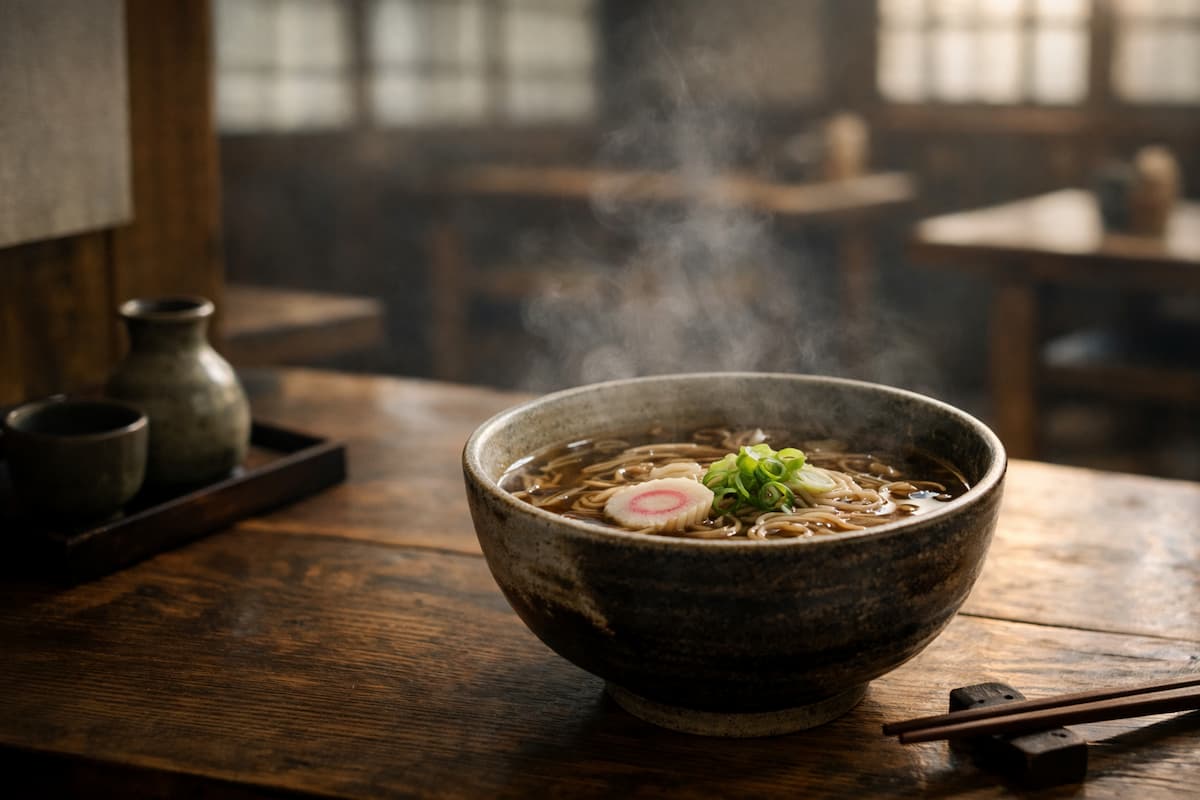
そばは、日本人にとってとても身近な食べ物です。
立ち食いそばから町のそば屋、家庭の乾麺まで、
年齢や場面を選ばず、当たり前のように食べられています。
不思議なのは、
そばが「若い人向け」でも「年配の人向け」でもないこと。
人生のどの時期にも、自然に寄り添ってくれる料理です。
この記事では、
なぜそばが年齢を選ばず食べ続けられているのか、
日本人とそばの静かな関係について考えてみます。
▶関連記事
- りくろーおじさん、実は「アップルパイ」が伏兵すぎる件
- 「梅田スカイビル」は2,000円払う価値あり?空中庭園展望台の混雑・見どころを徹底レポート!
- 【日本の日常に寄り添う、とっておきの「バナナスイーツ」】
- 【海外向け】日本の年末年始フルガイド
年を重ねてからのそば
年を重ねると、
量は自然と少なめになります。
温かいそばを、
ゆっくり食べる日が増えていく。
それだけで十分、という感覚。
無理をしなくても満足できる。
そばは、
年齢に合わせて姿を変えてくれます。
食べるものは変わらず、
付き合い方だけが静かに変わっていく。
早くて、重くならない
そばは、
調子が万全でない日でも選びやすい食べ物です。
出てくるのが早く、
食べ終わるのも早い。
それでいて、食後に重さが残りにくい。
「ちゃんと食べた感じ」はあるのに、
体は軽いまま。
この感覚が、
年齢を問わず受け入れられてきた理由なのだと思います。
健康食だから続くわけではない
そばはよく、
栄養価が高いとか、
カロリーが低いとか、
そう説明されます。
でも実際には、
理屈で選ばれている食べ物ではありません。
・今日は重いものがつらい
・あまり考えずに食べたい
・体が自然にそう言っている
そばは、
そんなときに静かに選ばれます。
そば屋は、誰でも受け入れてくれる場所
そば屋には、
年齢による居心地の差があまりありません。
一人でも入りやすく、
長居しなくても気まずくならない。
子ども連れでも、年配の人でも、
同じように席に座れます。
「こう食べるべき」という空気がない。
それも、そば屋の魅力です。
そばは、人生の途中で手放さなくていい
多くの食べ物は、
年齢とともに「卒業」を迫られます。
脂っこいものが胃に障ったり、
量が多すぎたり、
賑やかすぎて落ち着かなかったり。
でも、そばは違います。
年を取ったからやめるのではなく、
年を取った分だけ、
食べ方を変えて隣にいてくれる。
派手さはありません。
けれど、一生付き合える。
そばは、
そんな「人生の相棒」のような料理なのだと思います。
余談ですが
そば屋にはカレーが置いてあることもあります。
だしが利いていて、
意外とおいしいことが多いので、
興味があったら試してみてください。
そばと同じように、
長く愛されてきた「だし」がベースにあるからこそ、
カレーもまた、
世代を選ばない味になるのかもしれません。
最後に、あくまで個人的な話ですが。
冷たいそばなら、冷やしたぬき。
温かいそばなら、天ぷらそばがおすすめです。
もし近くにそば屋がない場合は、
カップのインスタントそばという手もあります。
完璧ではありませんが、
「今日はそばでいい」という気分には、ちゃんと応えてくれます。
Soba: A Dish You Never Outgrow
In Japan, there are a few foods that people continue to eat throughout their entire lives.
Children, adults, and the elderly all enjoy them in the same form.
Soba is one of those foods.
It is not a special occasion dish.
If anything, it is very close to everyday life.
And yet, it is something people never seem to “graduate” from.
▶ Related Article
- Rikuro’s Uncle: The Apple Pie That Quietly Steals the Show
- Visiting Umeda Sky Building
- A Simple Banana Dessert That Fits Into Everyday Life in Japan
- Complete English Guide: How Japan Spends New Year’s — From Year-End Cleaning, Anime Bargains, Toshikoshi Soba, Hatsumode, First Sunrise to New Year Sales
When You Are a Child
As a child, soba is simple.
The broth is slightly sweet, easy to eat, and comforting.
You are not thinking about aroma or texture.
What matters is that it goes down smoothly.
Slurping loudly, spilling a little broth —
none of that feels important yet.
Soba does not demand understanding from the beginning.
It waits.
When You Become an Adult
As you grow older, soba changes — or rather,
your relationship with it does.
You start paying attention to texture,
to the aroma of the noodles,
to how much broth you dip them into.
You eat quickly, but not carelessly.
Slurp, finish, and step back out into the street.
Fast, but not rough.
Simple, but not shallow.
That balance fits naturally into a busy adult rhythm.
As You Grow Older
Later in life, portions become smaller.
A warm bowl of soba, eaten slowly,
can be more than enough.
There is no need to force yourself.
Soba quietly adjusts to where you are.
The food itself does not change.
Only the way you live with it does.
Fast, but Not Heavy
Soba is easy to choose, even on days when you are not at your best.
It arrives quickly.
It is finished quickly.
And yet, it rarely leaves you feeling weighed down.
You feel like you have eaten properly,
but your body remains light.
That feeling transcends age.
Not Because It Is “Healthy”
Soba is often explained in terms of nutrition:
low calories, good balance, gentle on the body.
But people do not choose soba because of theory.
They choose it because:
- heavy food feels like too much today
- they do not want to think too hard
- their body simply asks for it
Soba answers quietly.
A Place for Everyone
Soba shops rarely feel exclusive.
Eating alone is normal.
Staying briefly is acceptable.
Children, adults, and elderly customers sit side by side.
There is no pressure about how you should eat.
That openness is part of what makes soba timeless.
A Dish You Do Not Have to Leave Behind
Many foods fade as life changes.
Some become too heavy.
Some too loud.
Some no longer fit the moment.
Soba is different.
You do not stop eating it because you grow older.
You simply eat it differently.
It is not flashy.
But it stays.
Soba is less like a trend,
and more like a quiet companion throughout life.
A Small Side Note
One more thing.
Many soba shops in Japan also serve curry.
It may sound strange at first.
But the curry is often rich with dashi — Japanese soup stock —
the same foundation that makes soba broth so comforting.
If you are curious, it is worth trying.
Like soba, it is a flavor that crosses generations.
One Last, Personal Note
Just personally speaking:
For cold soba, I recommend hiya-shi tanuki —
chilled soba with tempura bits.
For hot soba, tempura soba is a classic choice.
The noodles remain the star,
with tempura adding just a little richness.
And if there is no soba shop nearby,
instant cup soba is also an option.
It may not be perfect,
but it still understands the feeling of
“Today, soba feels right.”






コメント