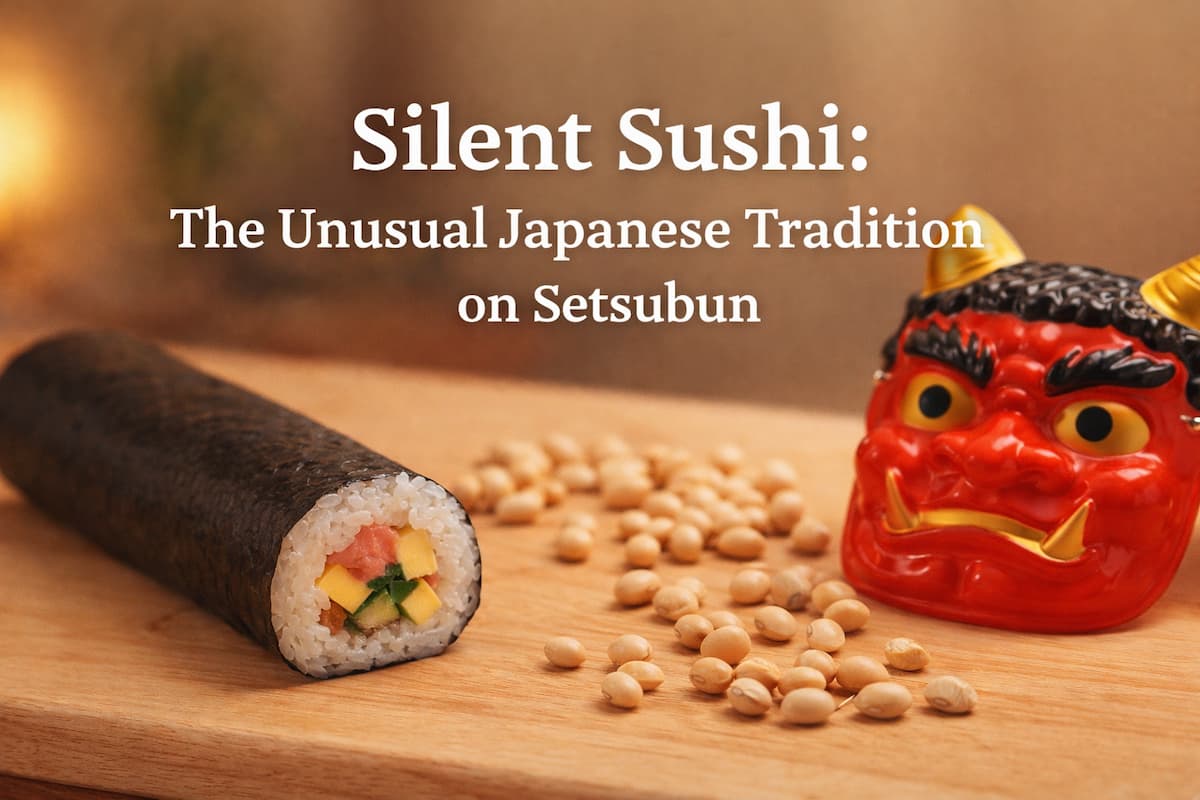
2月初旬、日本には「節分(せつぶん)」と呼ばれる行事があります。
節分は季節の変わり目にあたる日で、特に「春の始まりの前日」として大切にされてきました。
この日には、家の中や外で豆をまき、
「鬼は外、福は内」
と唱えながら、悪いものを追い払い、福を呼び込むとされています。
▶関連記事
鬼は、本当に“鬼”だけ?
節分で追い払う「鬼」は、必ずしも怖い存在そのものを指しているわけではありません。
病気や災害、うまくいかない出来事、
あるいは自分の中にある怠けた気持ちや弱さ――
そうした「悪いもの」の象徴として鬼が使われてきた、とも言われています。
豆まきは、そうした一年の厄を外に追い出し、
新しい季節を気持ちよく迎えるための行事です。
恵方巻きという、ちょっと不思議な習慣
節分の日には、恵方巻きと呼ばれる太巻きを食べる習慣もあります。
恵方巻きには、いくつか独特なルールがあります。
- 太巻きを切らずに
- その年の「恵方(えほう)」と呼ばれる縁起の良い方角を向いて
- 無言で食べる
願いごとを思い浮かべながら、一本食べきると良いとされています。
初めて聞くと少し不思議ですが、日本ではすっかりおなじみの風景です。
恵方は毎年変わります
ここで少しややこしいポイントがあります。
恵方は毎年同じではありません。
年ごとに方角が決められており、
2026年の恵方は 南南東 です。
「去年は違う方向だった気がする」
という感覚は正しく、日本では毎年、カレンダーやニュースで恵方を確認するのが普通です。
豆まき、そして豆を食べる話
節分では、豆をまくだけでなく、豆を食べる習慣もあります。
「自分の年齢の数(地域によっては+1粒)の豆を食べると、健康で一年を過ごせる」
という言い伝えがあるためです。
そうなると、豆が気に入ってしまった場合――
気づいたら袋が空になるまで食べてしまう
というのも、ある意味自然な流れかもしれません。
まじめで、でもどこかゆるい行事
方角を気にして太巻きを食べ、
鬼を追い払うために豆をまき、
その豆を結局全部食べてしまう。
節分は、厳格な儀式というよりも、
日本では「季節を感じる、ちょっとしたイベント」として、
ゆるく楽しまれている行事です。
もし2月初めに日本を訪れることがあれば、
人々が同じ方向を向いて太巻きを食べている、
少し不思議な光景に出会うかもしれません。
※画像はAI生成のイメージで、実際の商品と異なる場合があります。
What Is Setsubun in Japan?
In early February, Japan celebrates a seasonal event called Setsubun.
Setsubun marks the transition between seasons and is traditionally considered the day before the beginning of spring.
On this day, people throw roasted soybeans while saying
“Oni wa soto, fuku wa uchi”
which means “Demons out, good fortune in.”
The custom is meant to drive away bad luck and welcome good fortune for the new season.
▶ Related Article
- Japan as a “Charm Culture”
- How to Enjoy Ekiben on the Shinkansen:
- Rikuro’s Uncle: The Apple Pie That Quietly Steals the Show
Who (or What) Is the “Oni”?
The oni (demon) in Setsubun does not only represent a scary creature.
It is often seen as a symbol of things people want to avoid, such as illness, disasters, bad habits, or even one’s own laziness and negative feelings.
By throwing beans, people symbolically push those unwanted things away and prepare for a fresh start.
The Curious Tradition of Ehomaki
On Setsubun, many people in Japan eat a special sushi roll called Ehomaki.
There are a few unusual rules:
- Eat the sushi roll whole, without cutting it
- Face the year’s lucky direction (ehō)
- Eat it silently, while making a wish
Finishing the roll is believed to bring good luck for the year.
It may sound strange at first, but for many Japanese people, this has become a familiar seasonal custom.
The Lucky Direction Changes Every Year
Here is an important detail:
the lucky direction changes every year.
People check calendars or the news to make sure they are facing the correct direction.
In 2026, the lucky direction is south-southeast.
So if you feel like the direction was different last year, you are probably right.
Bean Throwing… and Bean Eating
After throwing beans, people also eat them.
There is a saying that eating the same number of beans as your age
(sometimes plus one extra)
will help you stay healthy throughout the year.
And if you happen to like roasted soybeans,
it is not unusual to keep eating them
until the bag is completely empty.
A Serious Tradition, Enjoyed Casually
Facing a specific direction to eat sushi,
throwing beans to chase away bad luck,
and then eating those beans anyway.
Setsubun is not a strict religious ritual.
In modern Japan, it is a lighthearted seasonal event that people enjoy in their own way.
If you visit Japan in early February,
you might see people quietly facing the same direction,
holding a large sushi roll—
a small but charming glimpse into everyday Japanese culture.







コメント